Mechanism Visualization
Neurobiological Pathways
Interactive exploration of PT-141's mechanism of action through the melanocortin receptor system and central nervous system pathways.
Mechanism · Section 01
Interactive Mechanism Preview
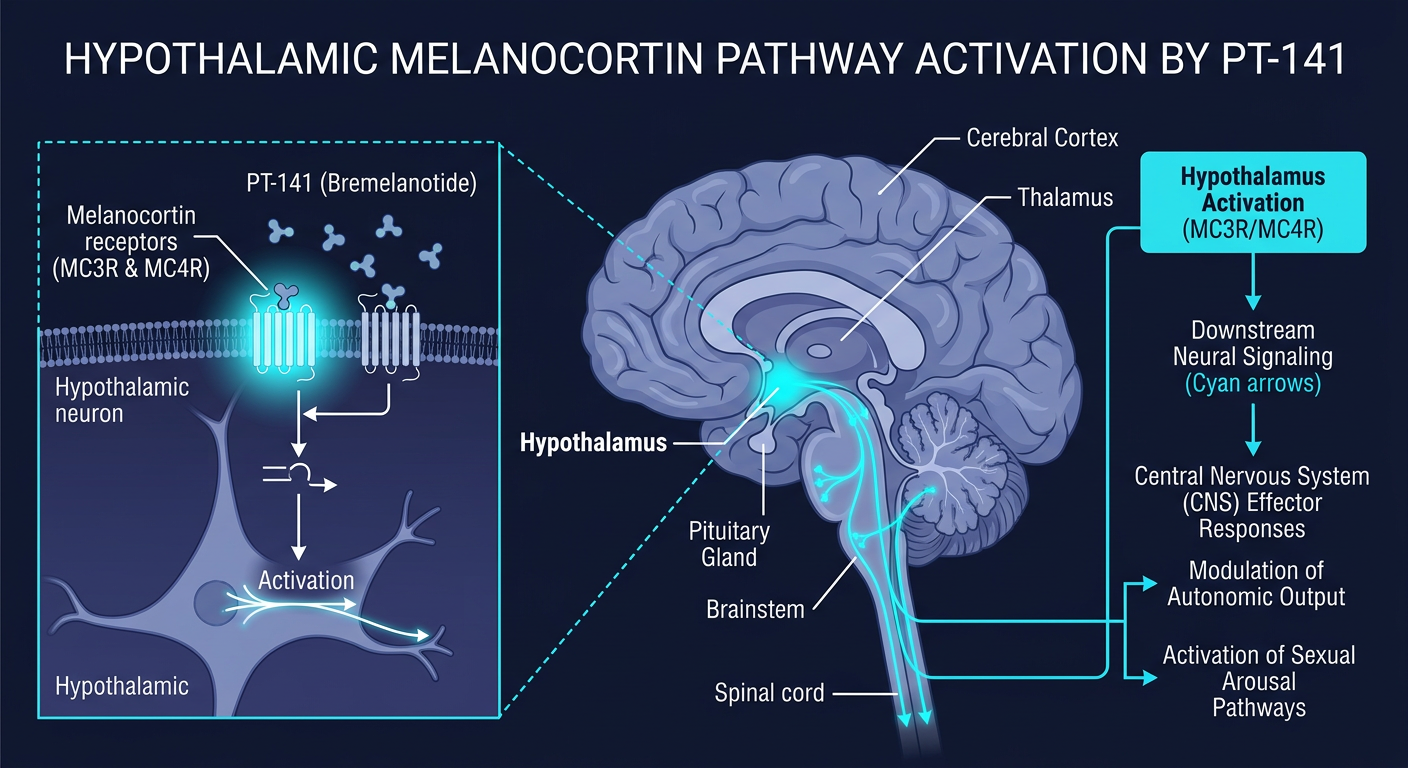
MC4R Activation
Hypothalamus
PT-141 primarily engages melanocortin signaling through MC4R in the hypothalamus, initiating central arousal-related pathways.
Select any node to inspect its pharmacological role
Signal Transduction Cascade
Ligand Binding
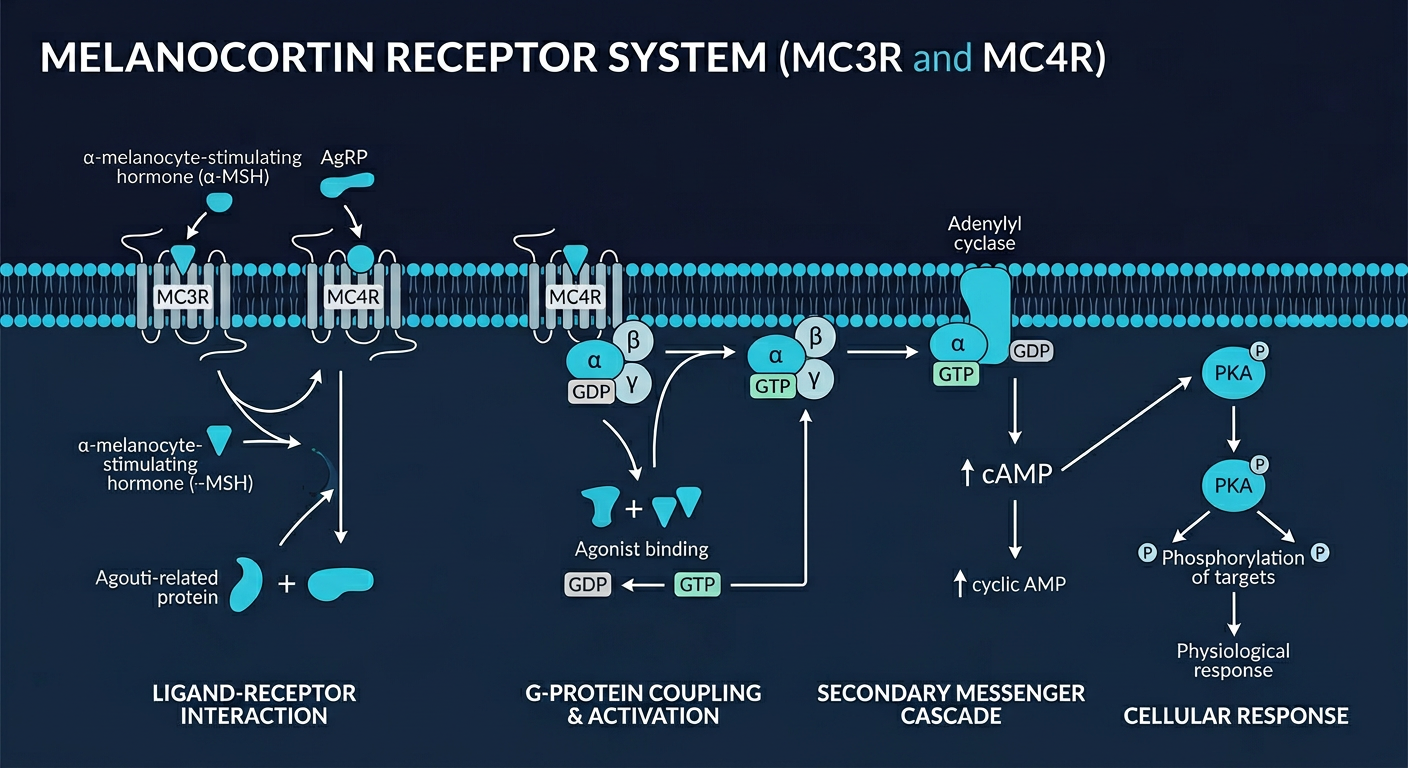
PT-141 binds to MC4R in the paraventricular nucleus of the hypothalamus.
G-Protein Activation
Receptor activation triggers Gαs subunit dissociation, stimulating adenylyl cyclase.
cAMP Cascade
Intracellular cAMP levels increase, activating protein kinase A (PKA) signaling.
Neurotransmitter Release
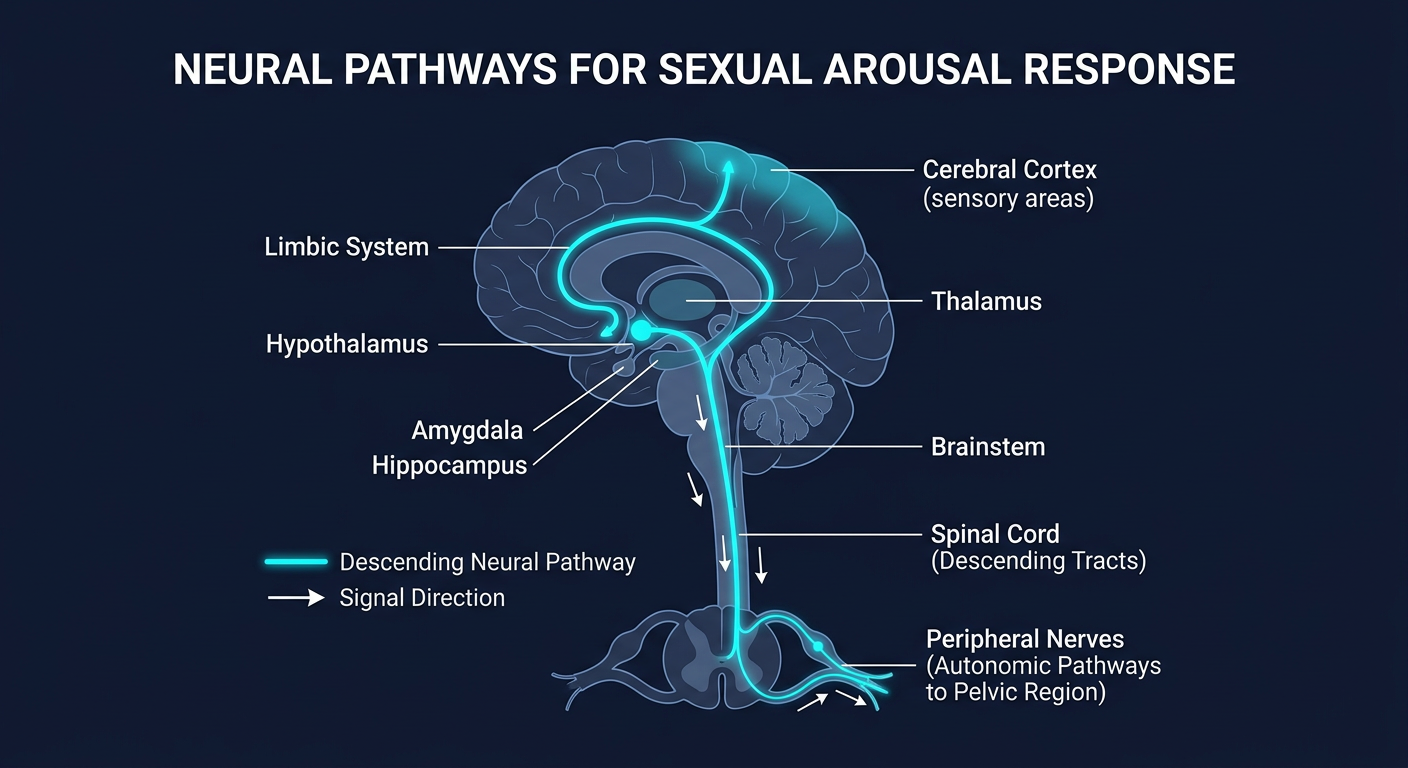
PKA modulates ion channels, triggering dopamine and oxytocin release in the limbic system.
Descending Signal
Neural signals propagate through spinal autonomic pathways to peripheral target tissues.
Pharmacokinetic Profile
Chemical Classification
Cyclic Lactam Heptapeptide
Synthetic analog of α-melanocyte-stimulating hormone (α-MSH)
Molecular Formula
C₅₀H₆₈N₁₄O₁₀
Molecular weight: 1025.18 g/mol
Primary Targets
MC3R / MC4R
Melanocortin-3 and Melanocortin-4 receptors (G-protein coupled)
Route of Action
Central Nervous System
Hypothalamic activation → limbic pathway engagement
Half-Life
~2.7 hours
Peak plasma concentration: ~1 hour post-administration
Bioavailability
~100% (SC)
Subcutaneous administration yields near-complete bioavailability
Selected References
Molinoff PB, et al. PT-141: A melanocortin agonist for the treatment of sexual dysfunction. Ann N Y Acad Sci. 2003;994:96-102.
Kingsberg SA, et al. Bremelanotide for the Treatment of Hypoactive Sexual Desire Disorder. Obstet Gynecol. 2019;134(5):899-908.
Hadley ME, Dorr RT. Melanocortin peptide therapeutics: historical milestones, clinical studies and commercialization. Peptides. 2006;27(4):921-930.
Pfaus JG. Pathways of sexual desire. J Sex Med. 2009;6(6):1506-1533.